
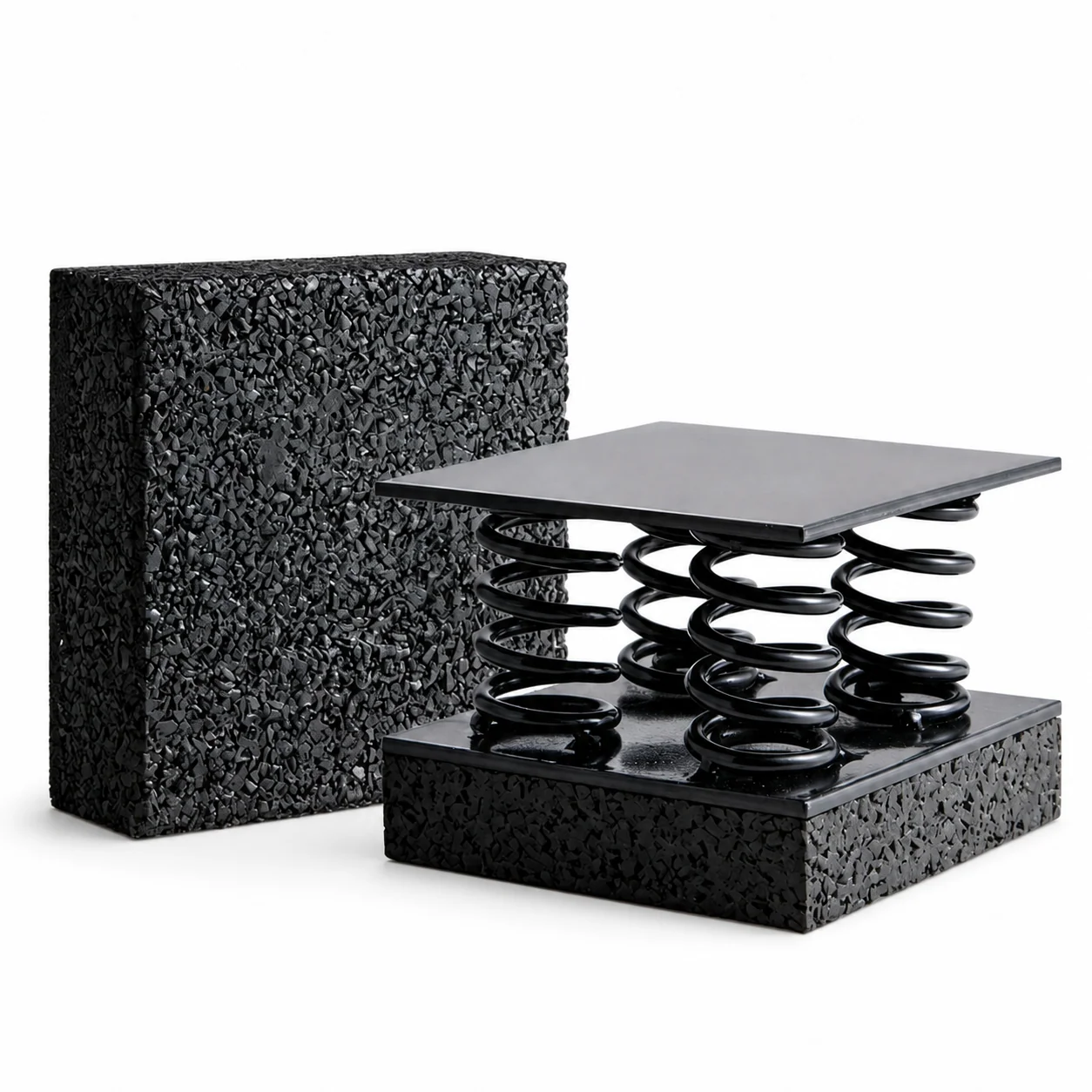
Floor Vibration Isolators
Multi-spring floor units support floating floors and equipment bases, reducing low-frequency vibration transfer into the structural slab.
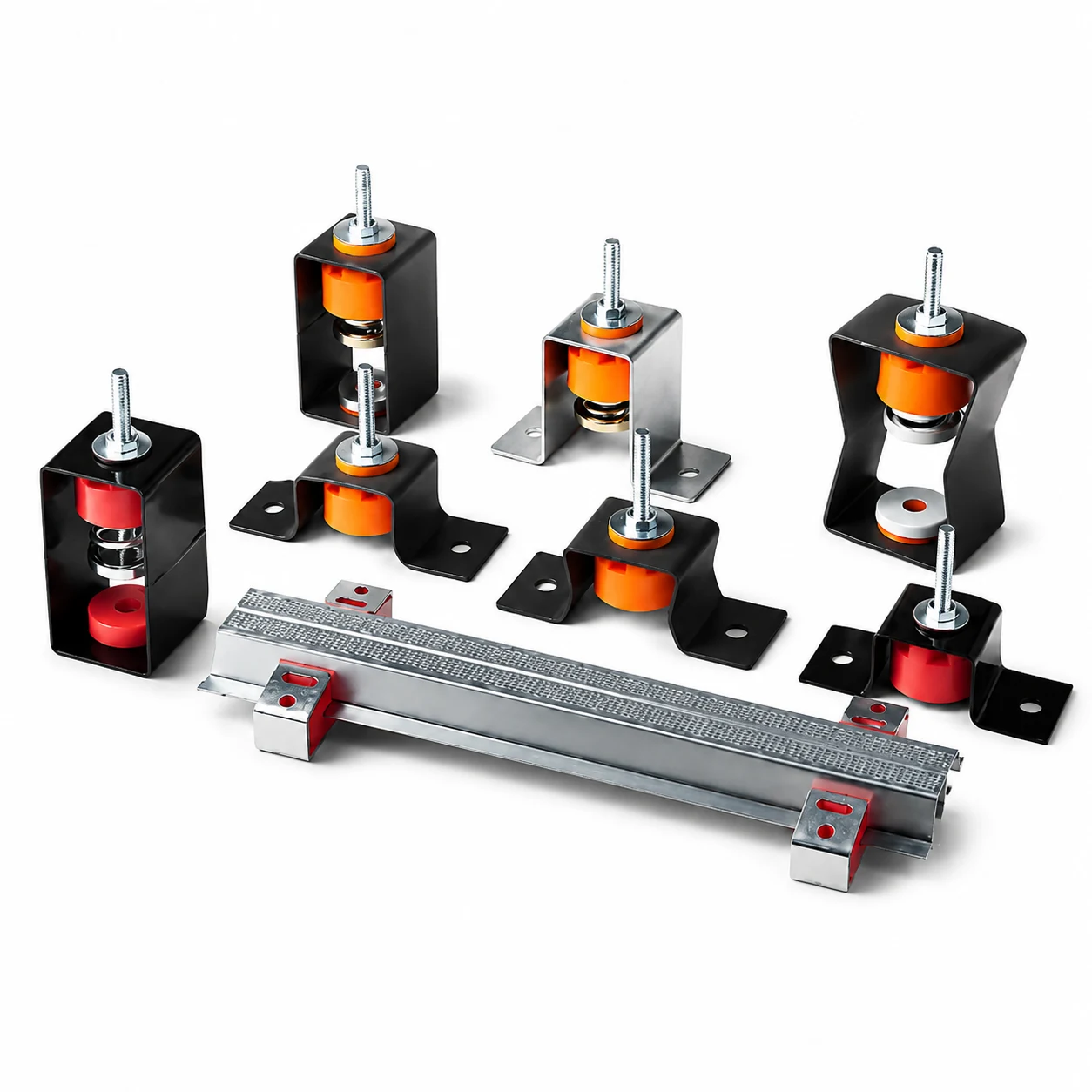
A coordinated range of resilient isolation components for floating floors, suspended ceilings, acoustic walls and compact wall-and-ceiling framing. Each component creates a resilient break that limits structure-borne vibration and noise transfer.
Vibration isolators combine a resilient spring or rubber element with a secure steel connection. Correct selection depends on supported load, operating frequency, required deflection and the surrounding acoustic assembly.
Multi-spring floor units support floating floors and equipment bases, reducing low-frequency vibration transfer into the structural slab.
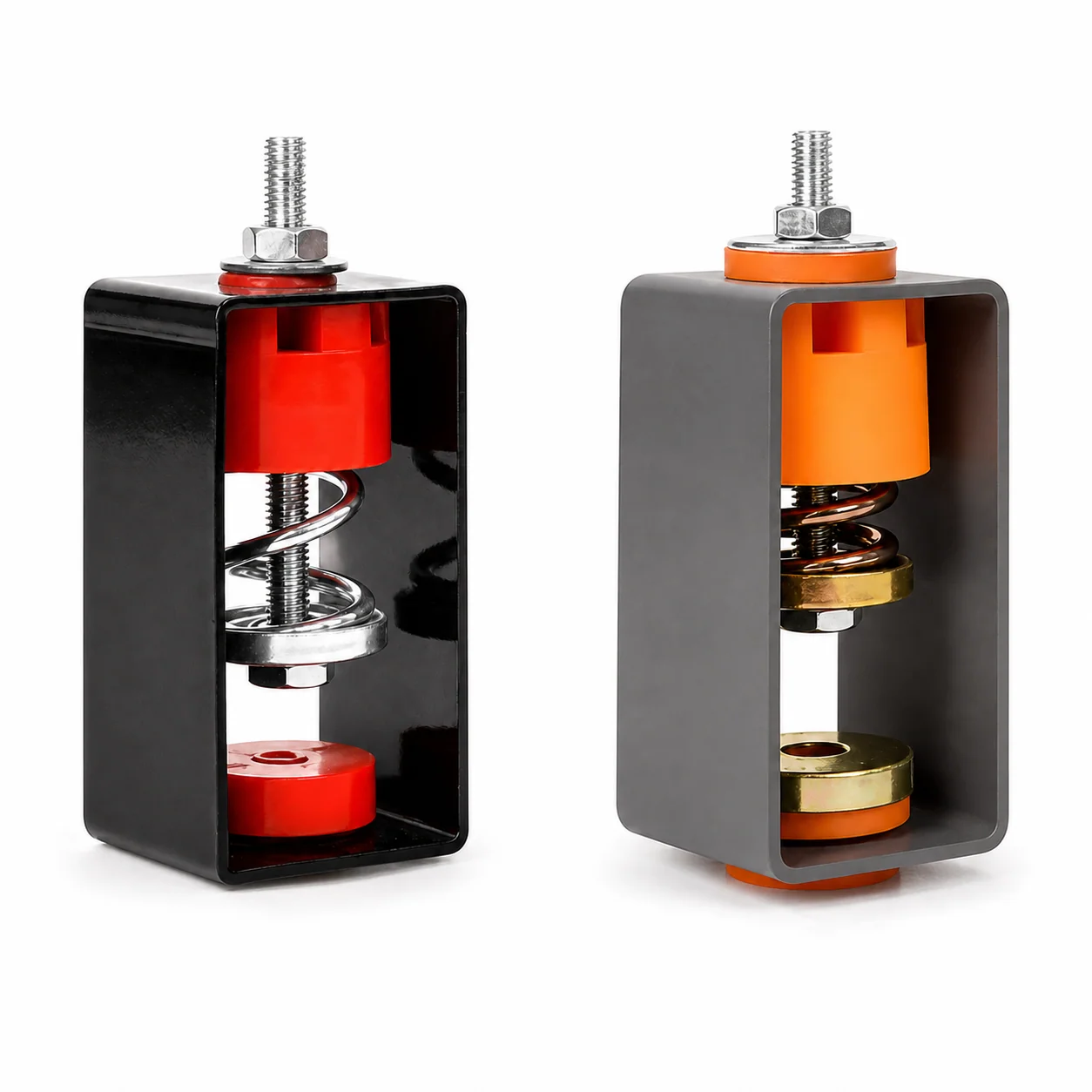
Spring-and-rubber ceiling hangers decouple acoustic ceiling frames from the structural slab in cinemas, KTV rooms and studios.
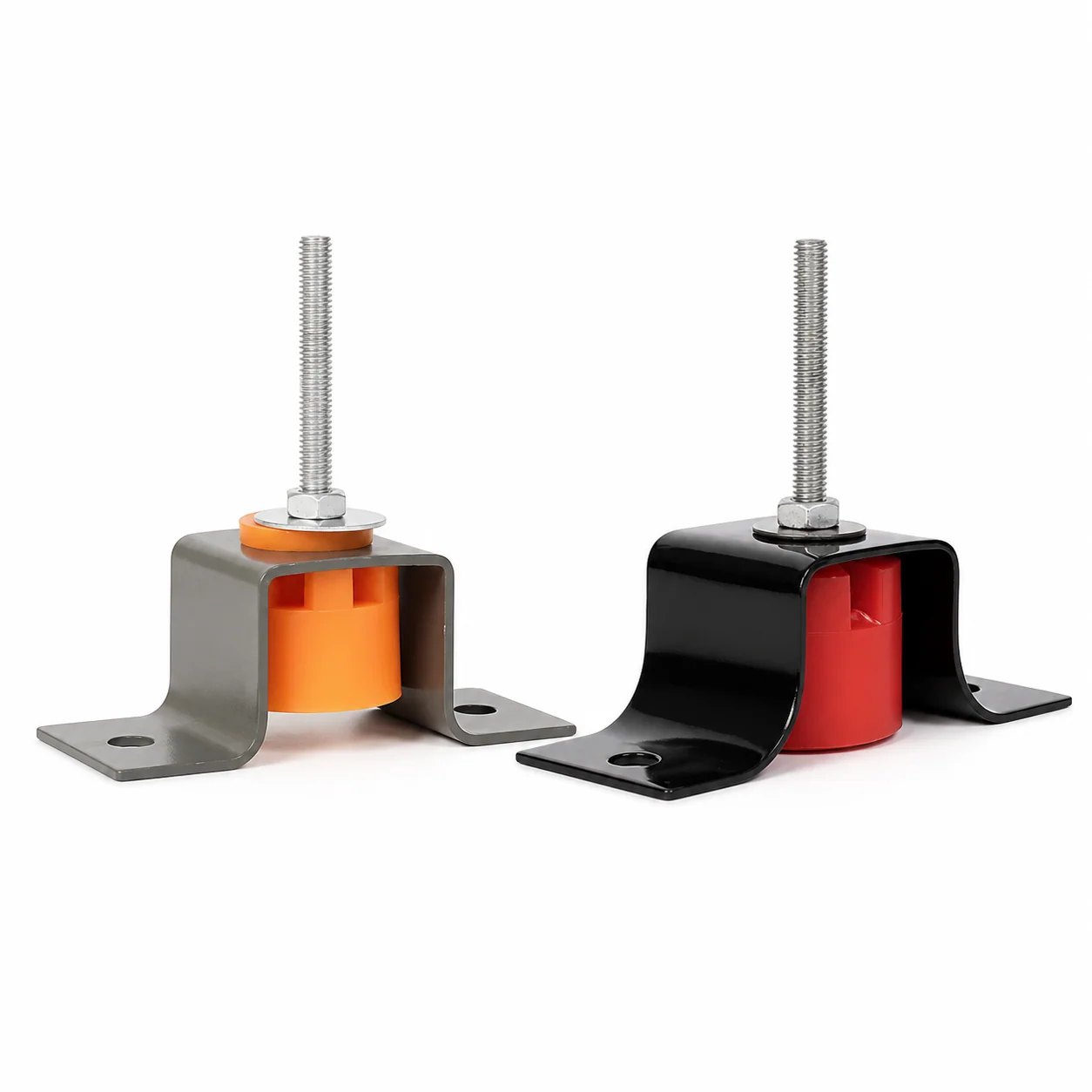
Bracket-mounted resilient connectors limit rigid bridging between the base wall and an independent acoustic lining frame.
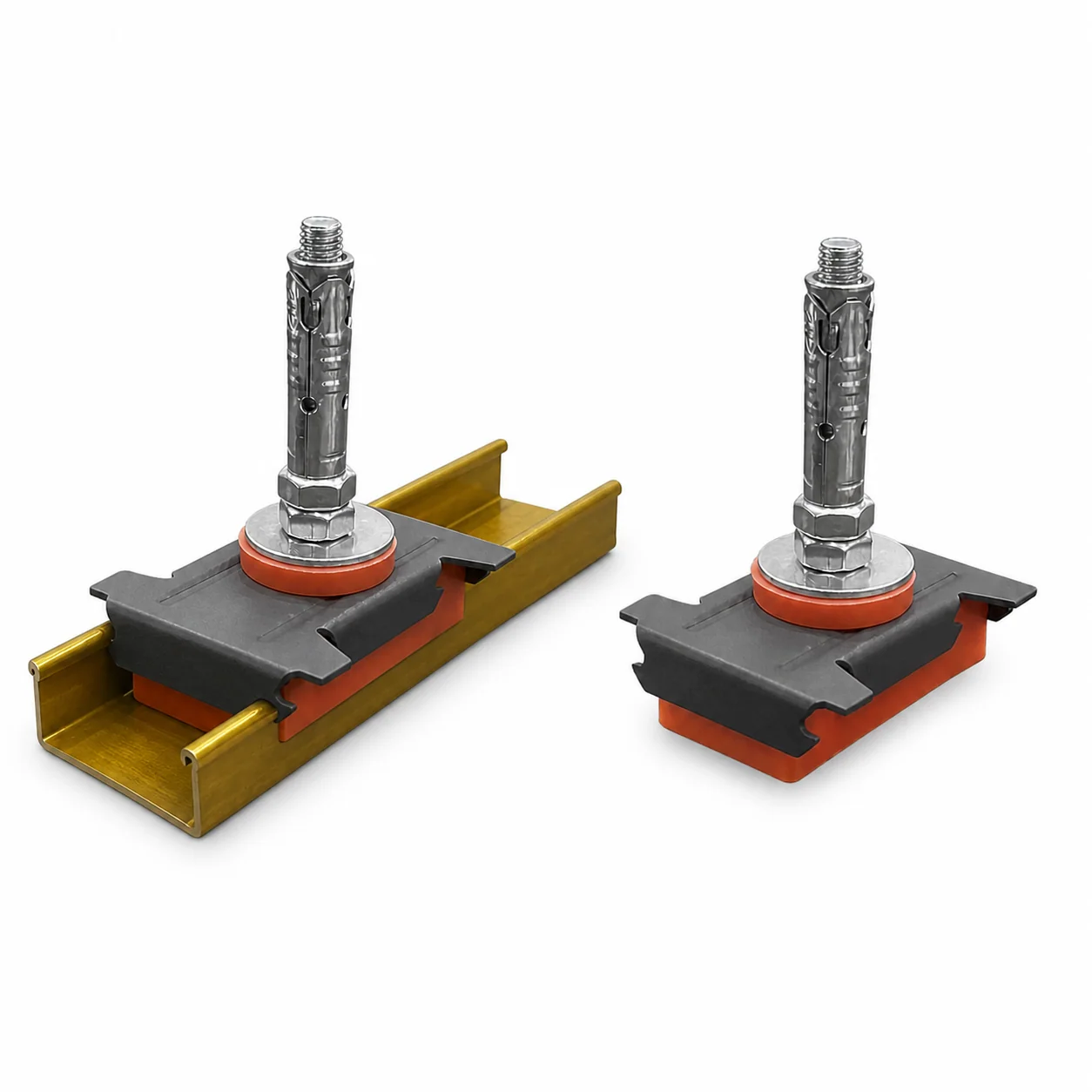
Low-profile expansion-bolt isolators connect light-gauge steel framing at walls and ceilings where installation depth is limited.
Spring platforms and resilient pads isolate impact noise, subwoofers and vibrating equipment from the structural floor.
Spring hangers separate the ceiling grid from the slab and complement acoustic infill and multilayer linings.
Wall mounts and resilient channels reduce flanking paths through rigid connections and supporting frames.
Selected isolators control vibration from fans, pumps, ducts, pipes and other mechanical equipment.
Final acoustic performance depends on framing, cavity infill, resilient connections, perimeter sealing and the number of lining layers.
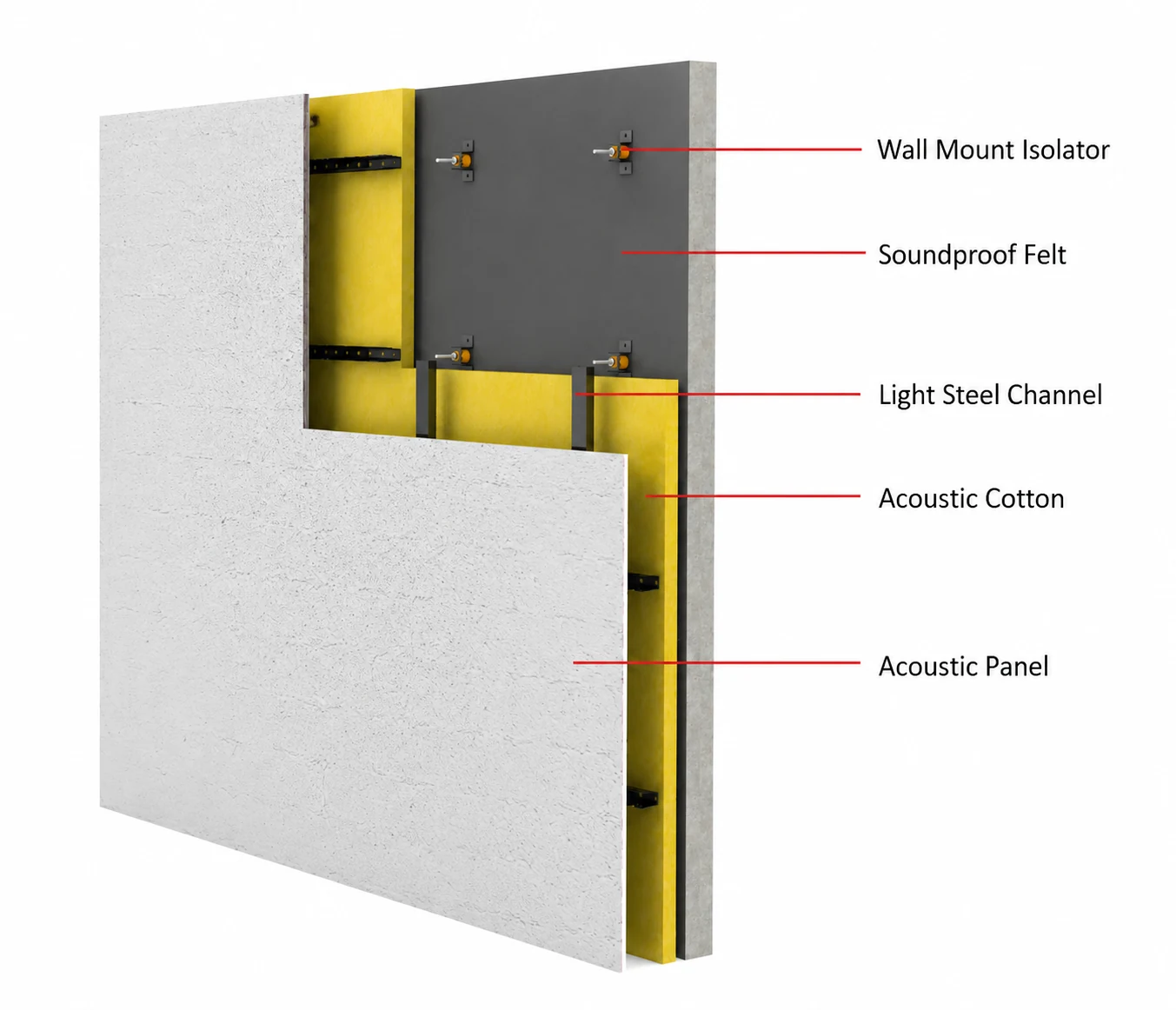
Combine the composite board with a separated stud frame, acoustic infill and resilient connections to reduce direct airborne transmission and structural bridging.
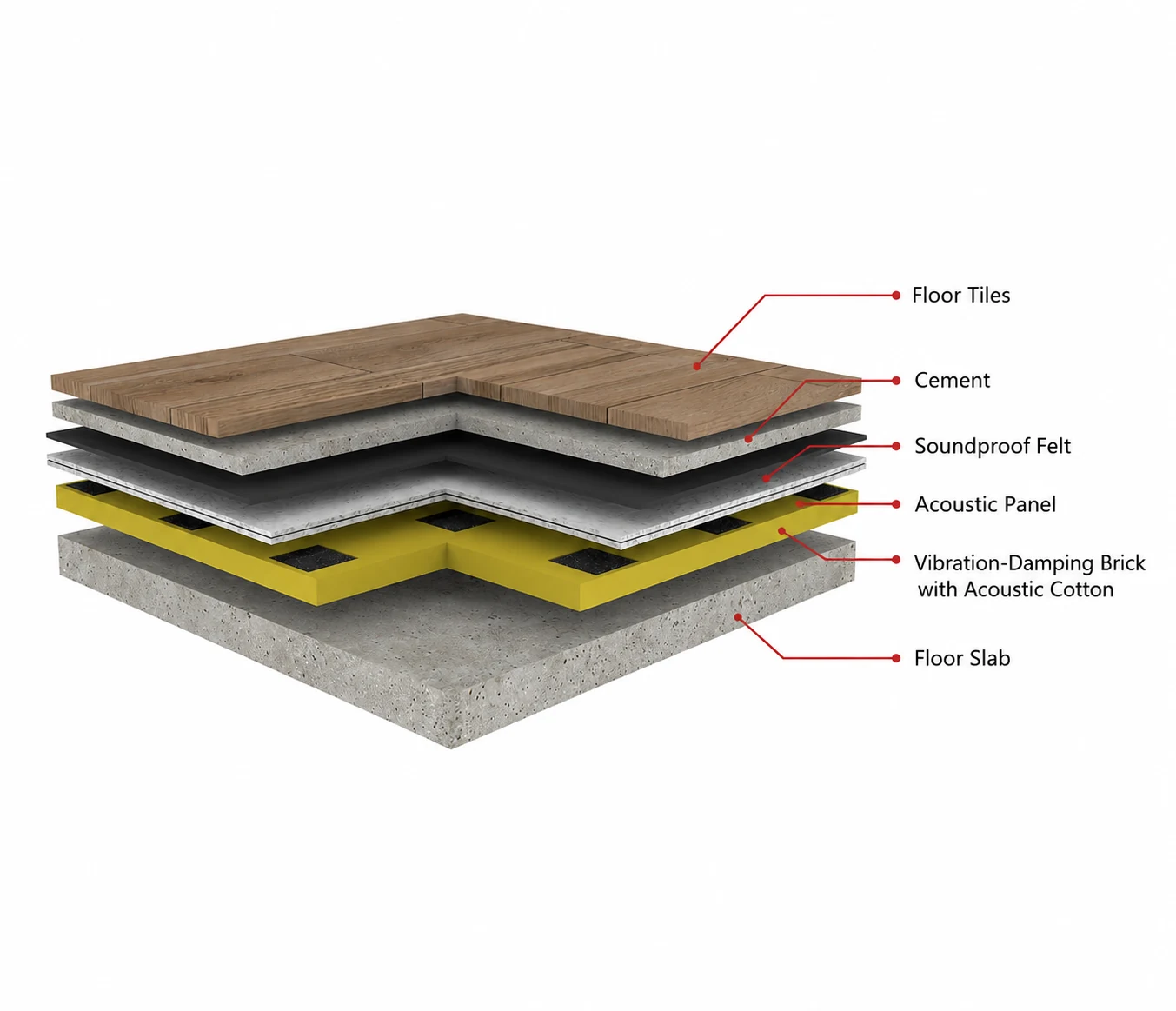
Use above a resilient underlayer within layered floor constructions to control impact noise and improve separation between occupied floors.
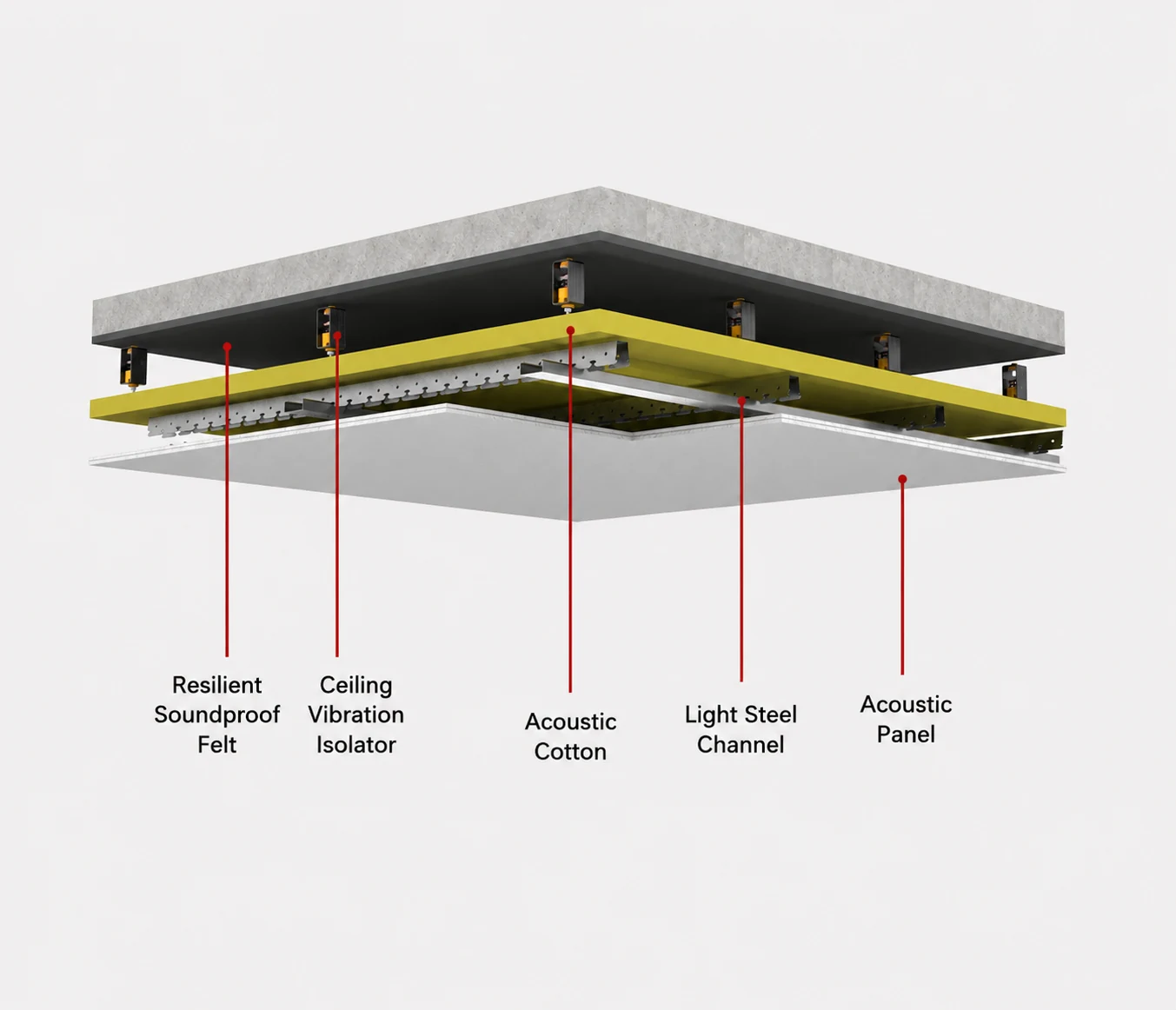
Integrate with resilient hangers, a metal ceiling frame and absorptive infill for cinemas, KTV rooms and other noise-sensitive interiors.
Send us your assembly drawing, supported load, application and quantity. Our export team will prepare a practical isolation proposal.