
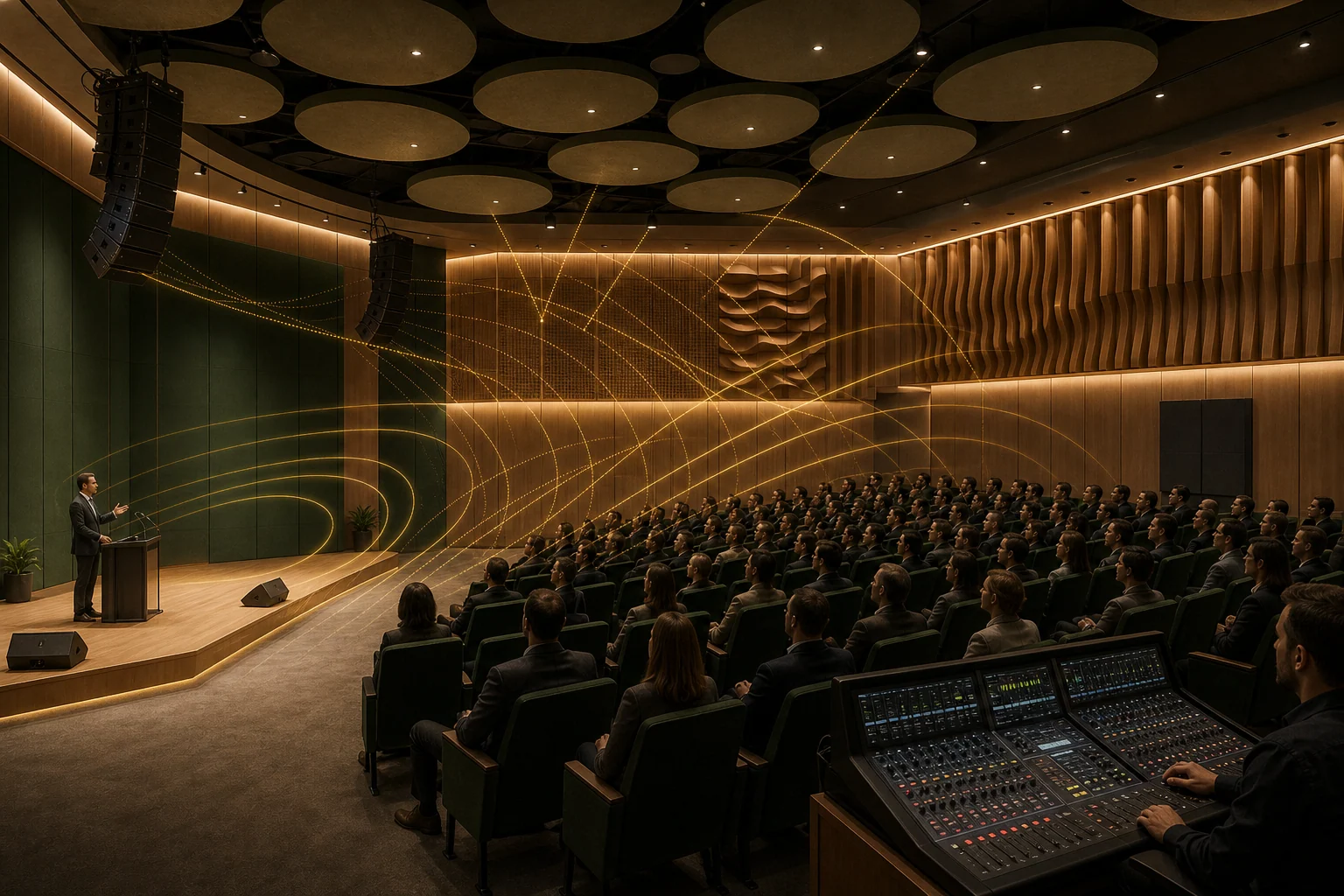
01
Broadband absorption across wall and ceiling surfaces
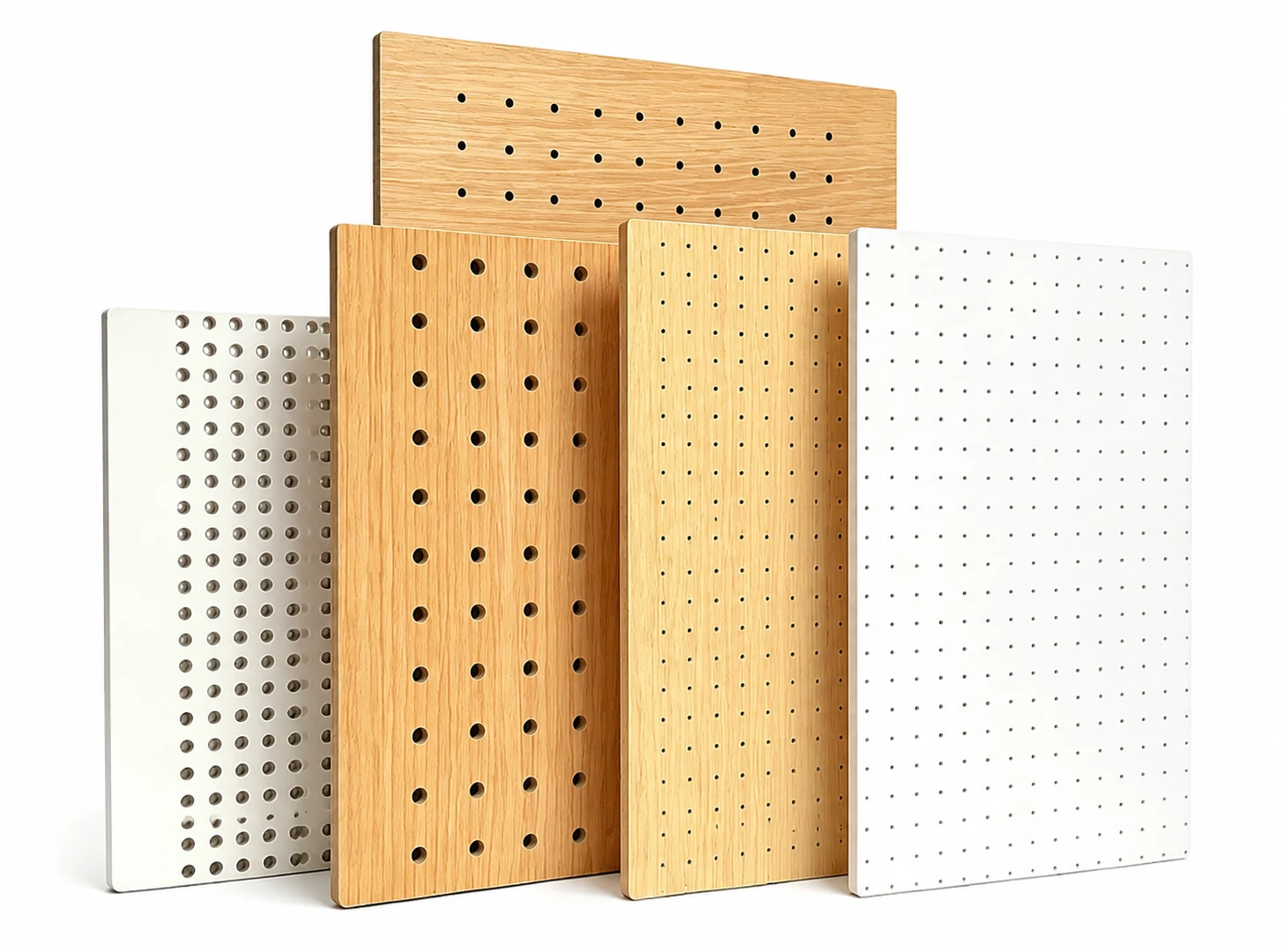
Use PET, fabric-wrapped and fiberglass panels, perforated or slotted wood panels, acoustic ceilings, suspended clouds, baffles and spatial absorbers where each surface can work effectively.
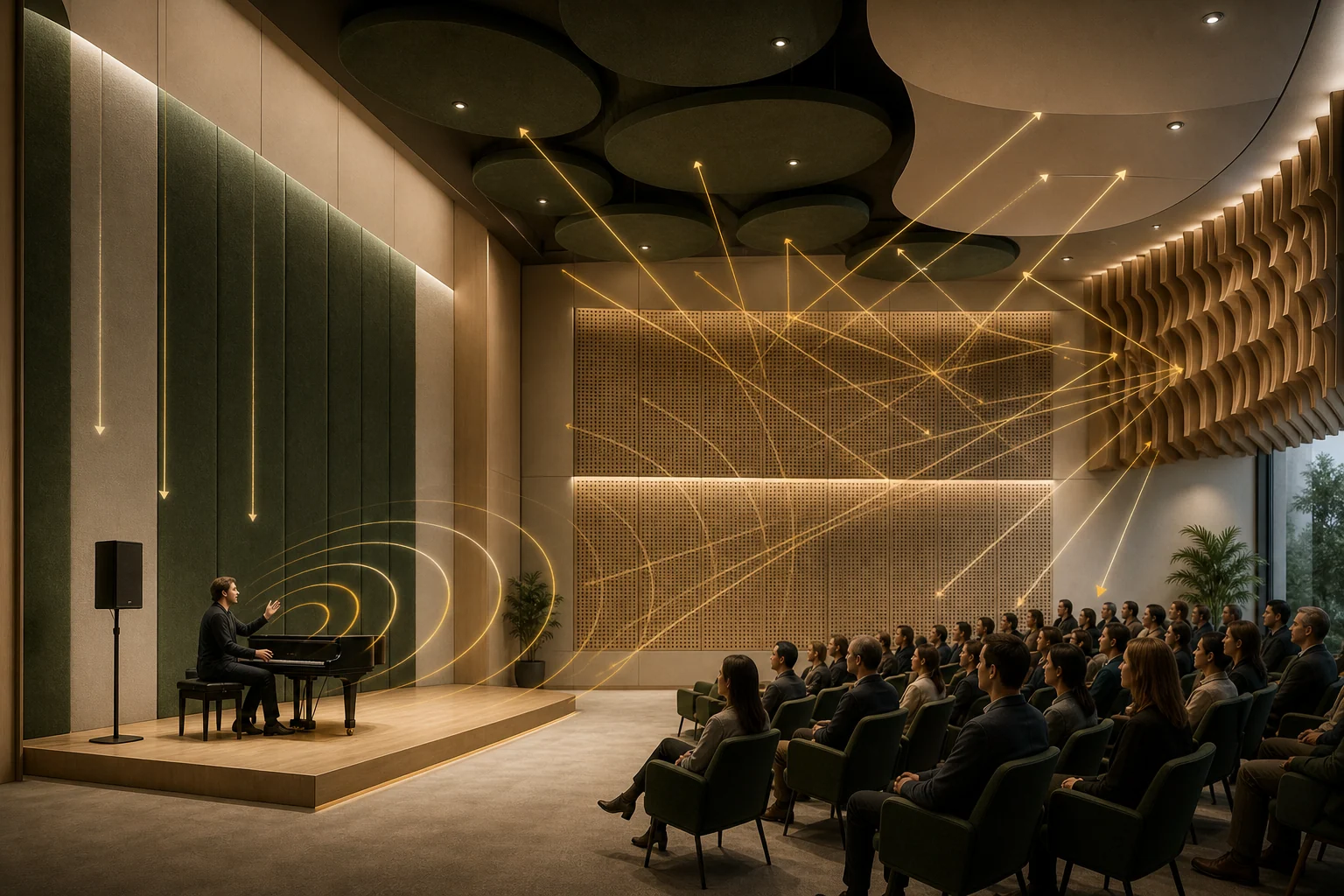
An integrated room-acoustics and sound-system framework that balances absorption, reflection, diffusion, low-frequency control and electroacoustic coverage for clear, natural and even sound.
Excessive reverberation, poor speech clarity, dry music, uneven coverage, echoes, sound focusing and acoustic feedback arise when room surfaces, geometry and sound systems are designed separately.
Coordinate material layout, room geometry, loudspeaker coverage, microphones and signal processing around the room use, volume, sound-source position and listener distribution.
Each image is paired with the design decision it supports, moving from absorption and reverberation control through reflection, diffusion and electroacoustic commissioning.
Use PET, fabric-wrapped and fiberglass panels, perforated or slotted wood panels, acoustic ceilings, suspended clouds, baffles and spatial absorbers where each surface can work effectively.
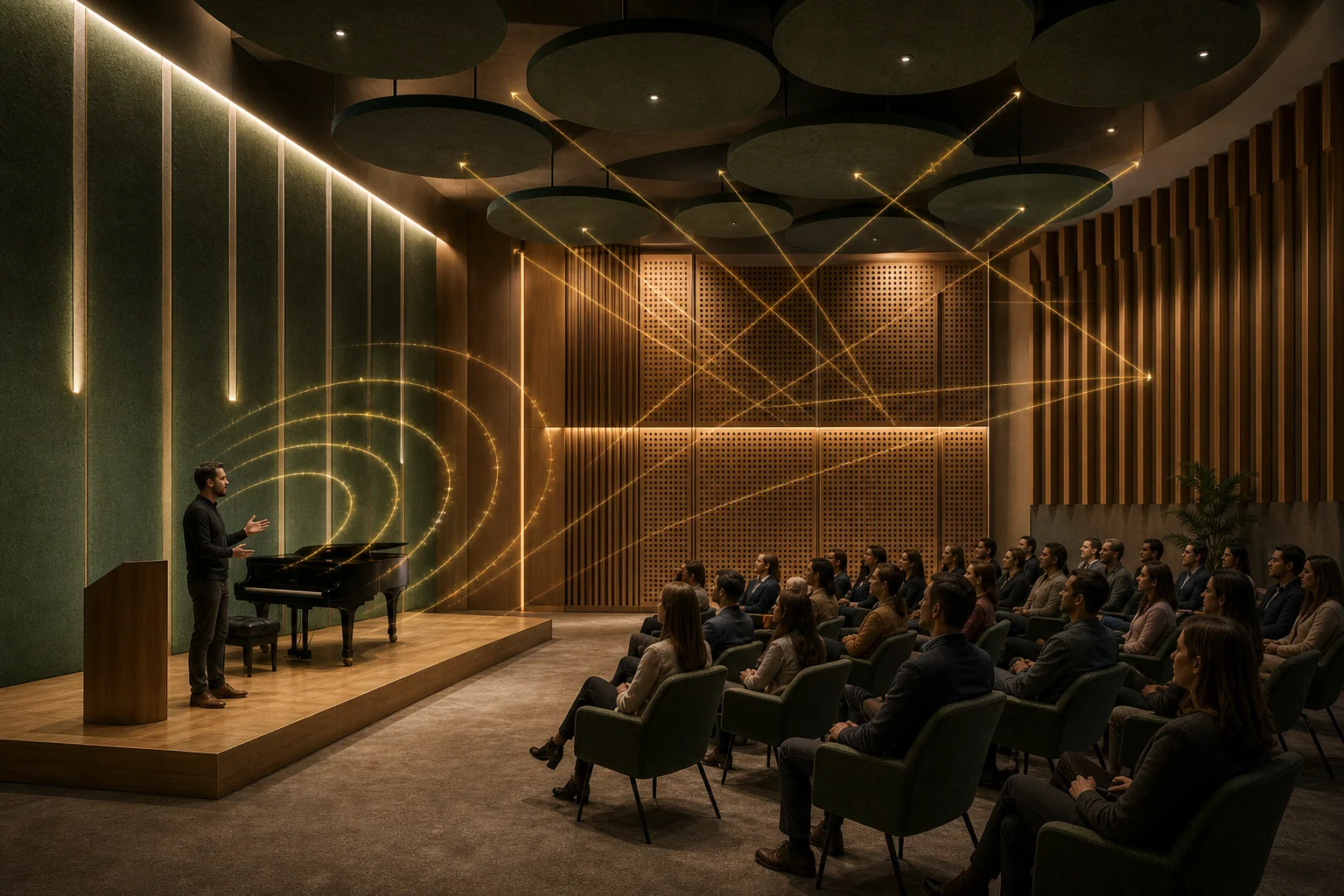
Prioritize ceilings, primary reflection points, parallel walls and high-energy zones; calculate treatment from room volume, use and source position instead of covering every surface and making the room unnaturally dry.
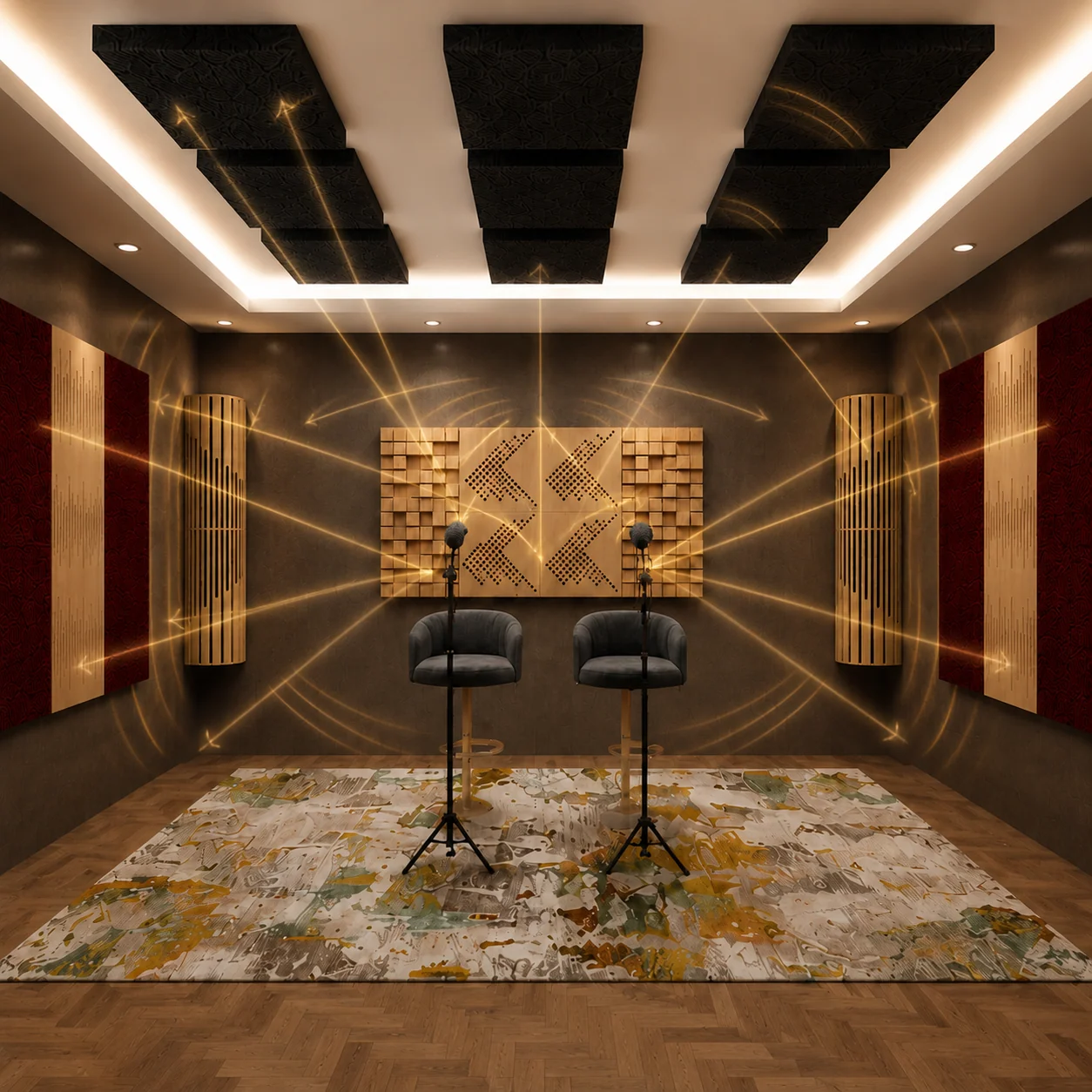
Increase cavity depth and backing absorption, and add membrane or resonant absorbers where needed, to strengthen low-frequency control and keep reverberation balanced between frequency bands.
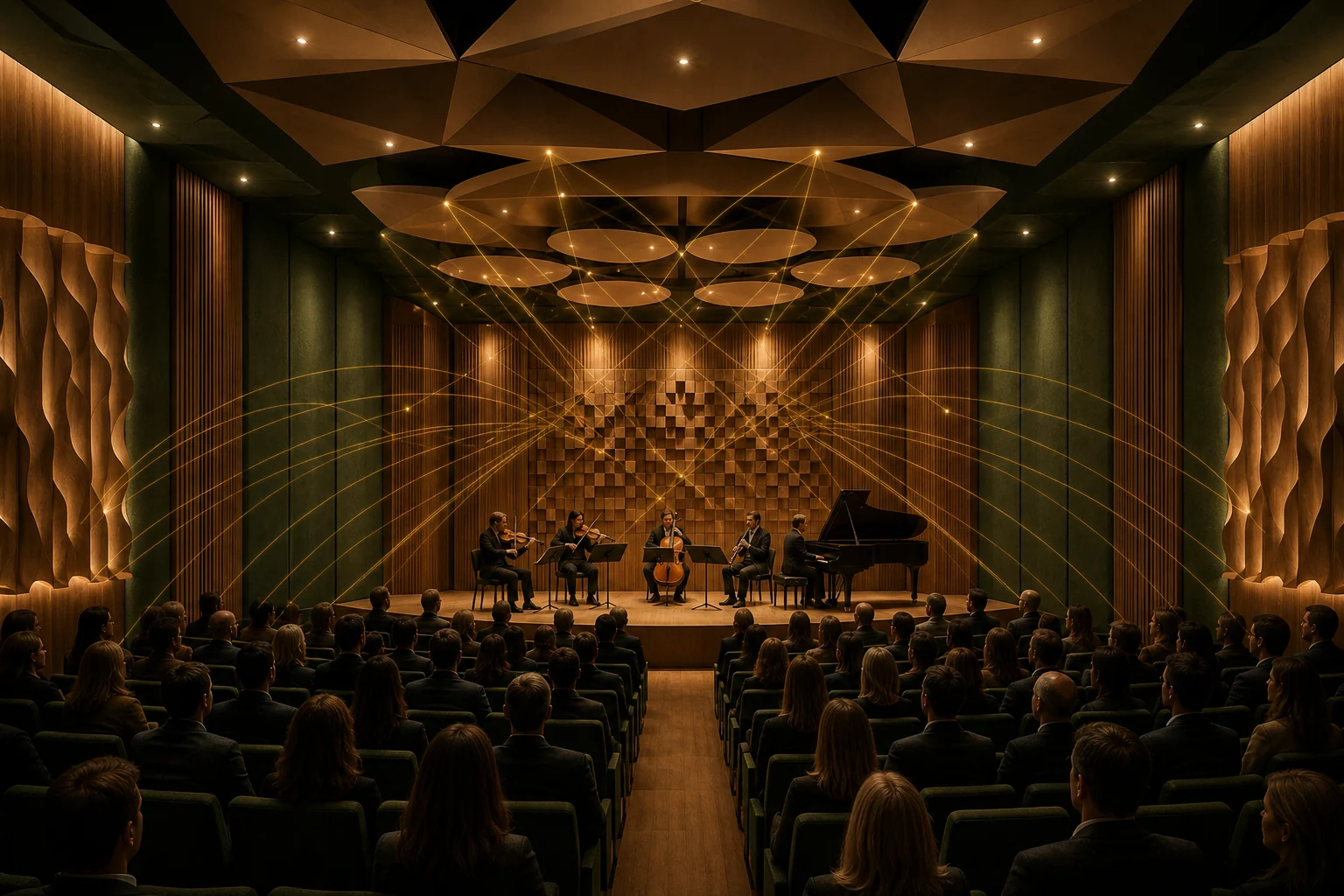
In music, performance and multi-purpose rooms, retain beneficial reflections alongside reverberation control so sound keeps natural loudness, warmth and spatial character.
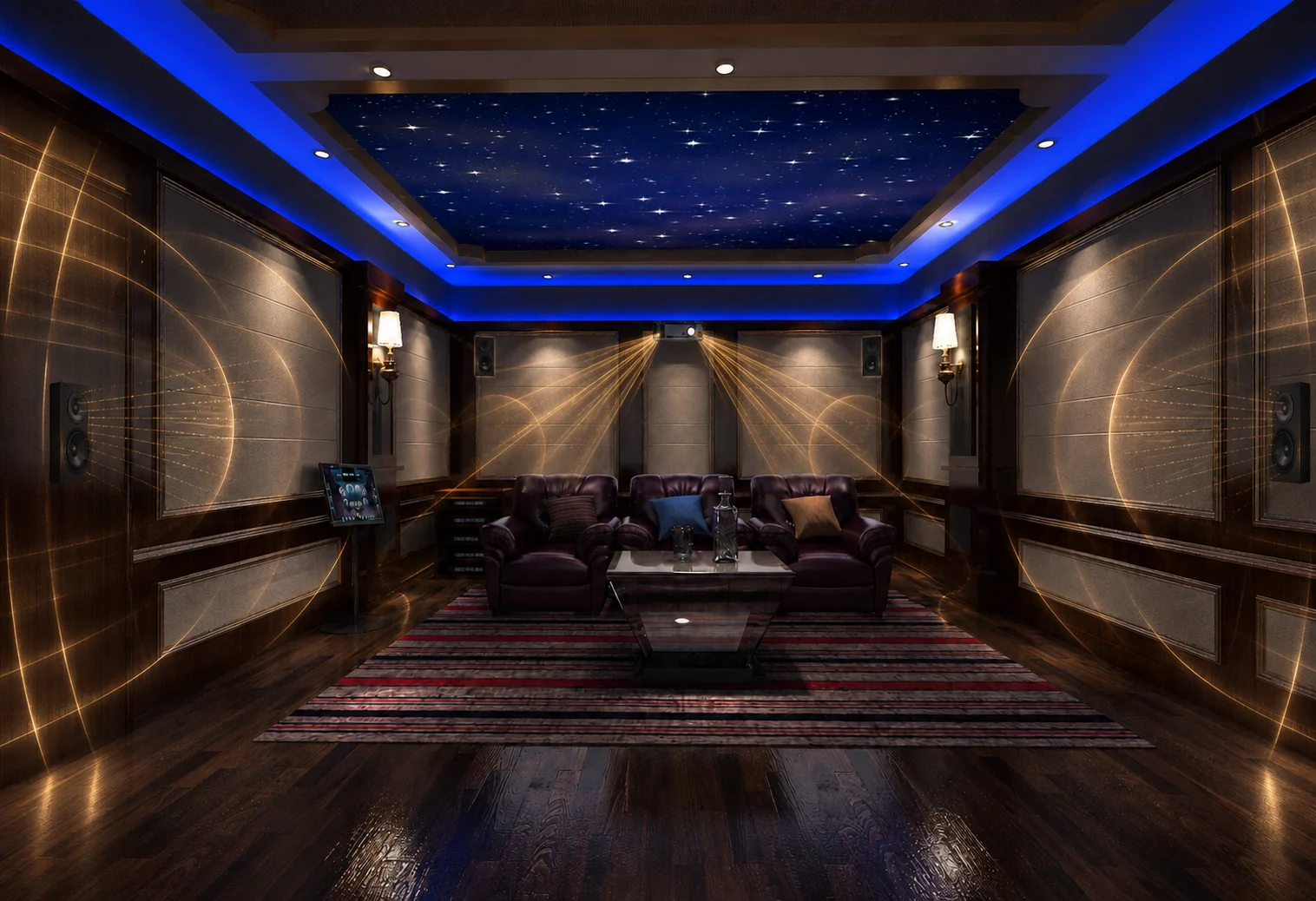
Place early-reflection surfaces near stages and lecterns to support performer ensemble, reinforce direct sound and improve listening from front to rear seating.
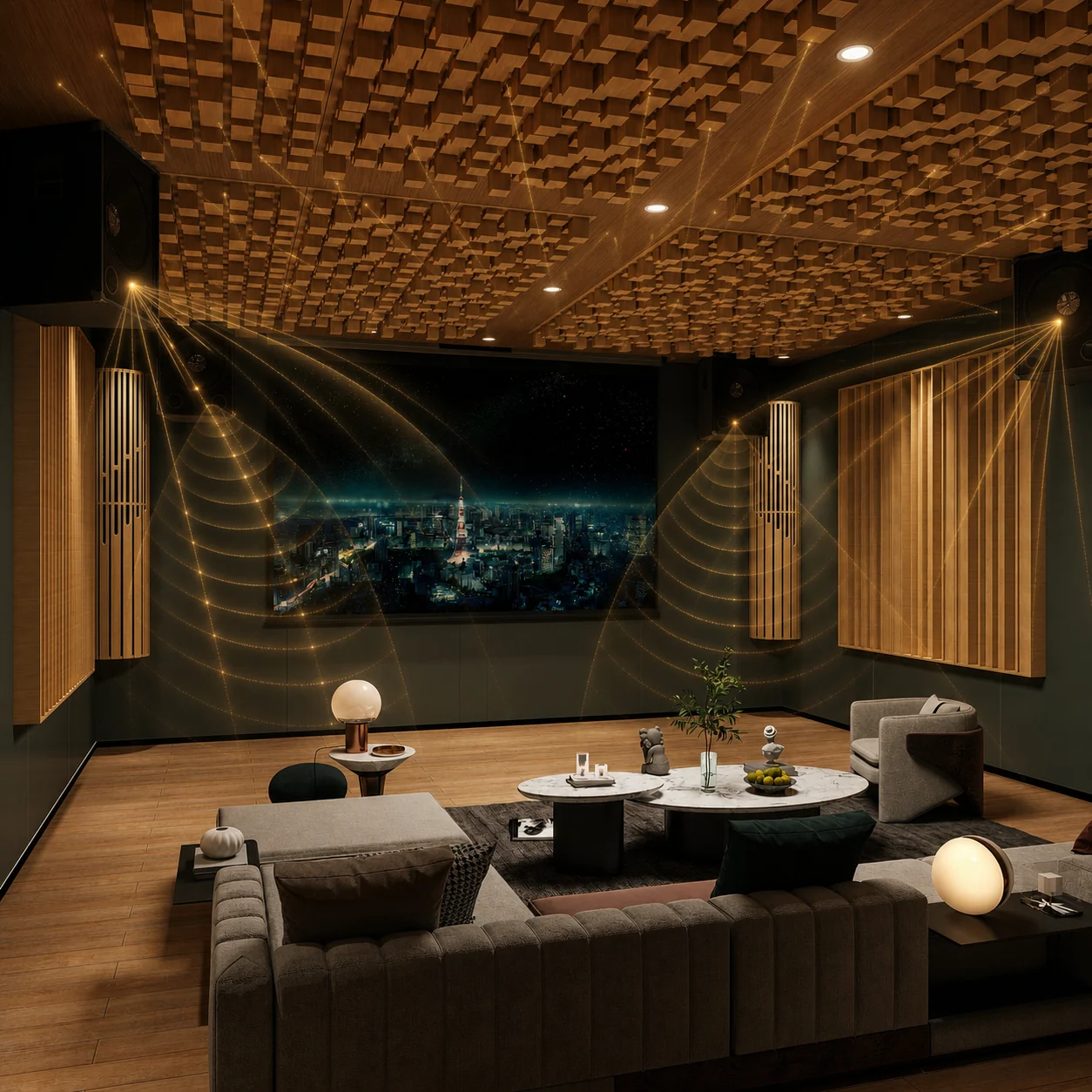
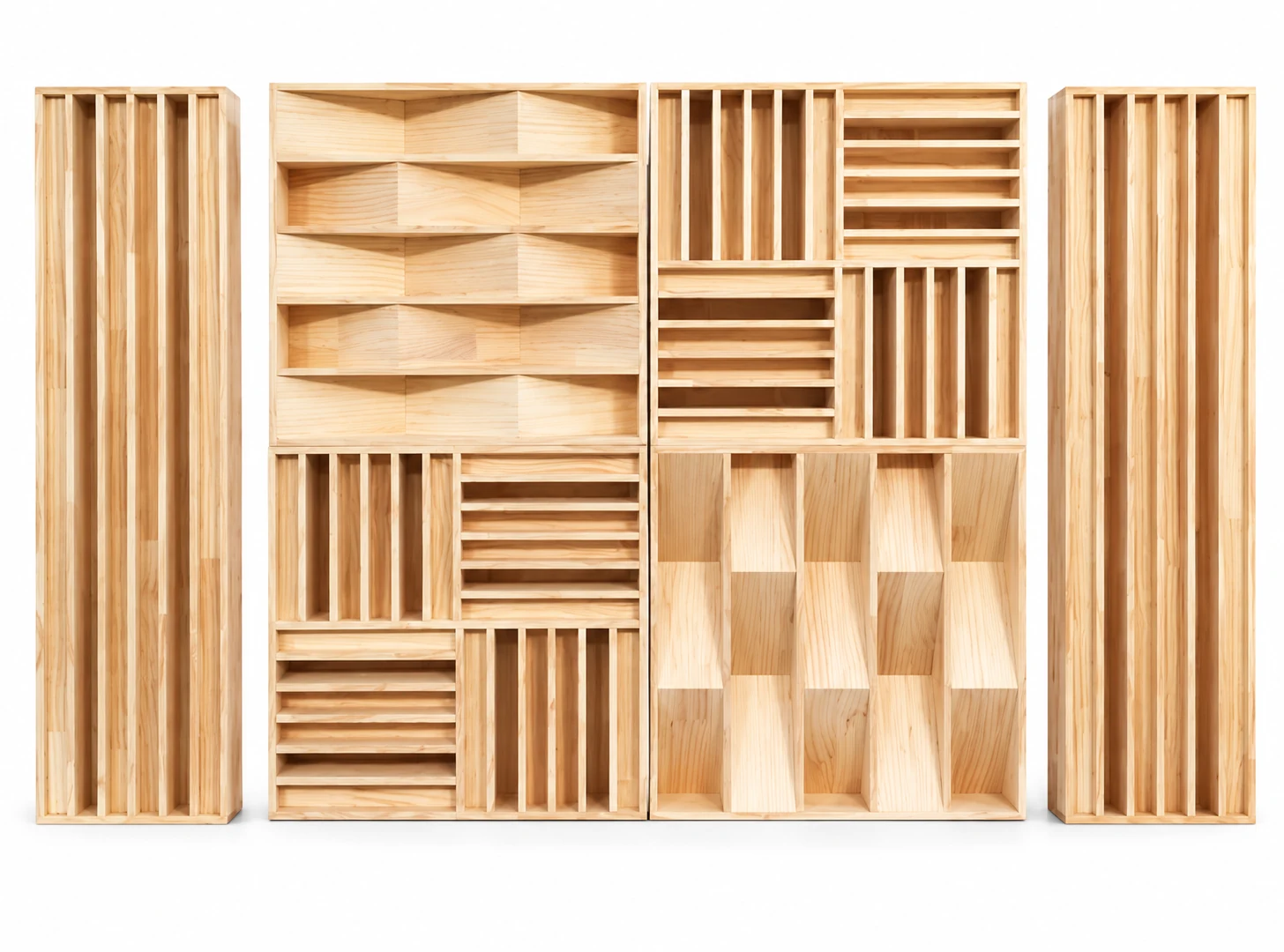
Use relief, folded, slatted or purpose-designed diffusers on audience side walls, rear walls and ceilings to distribute energy and reduce strong echoes, flutter, focusing and sound-shadow zones.
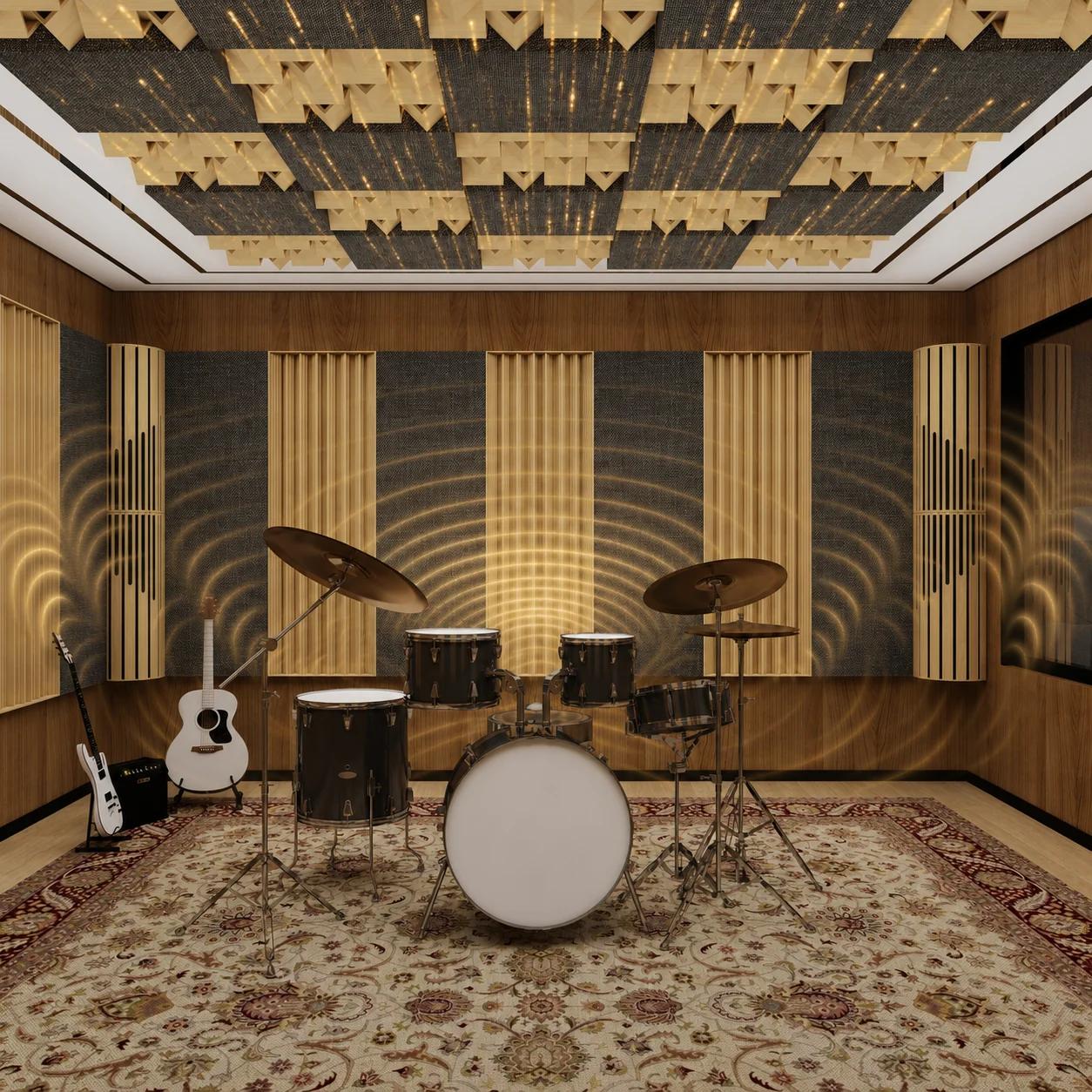
Avoid large smooth parallel walls, uninterrupted glazing and concave hard surfaces; use variable absorption or adjustable reflection where different operating modes require it.
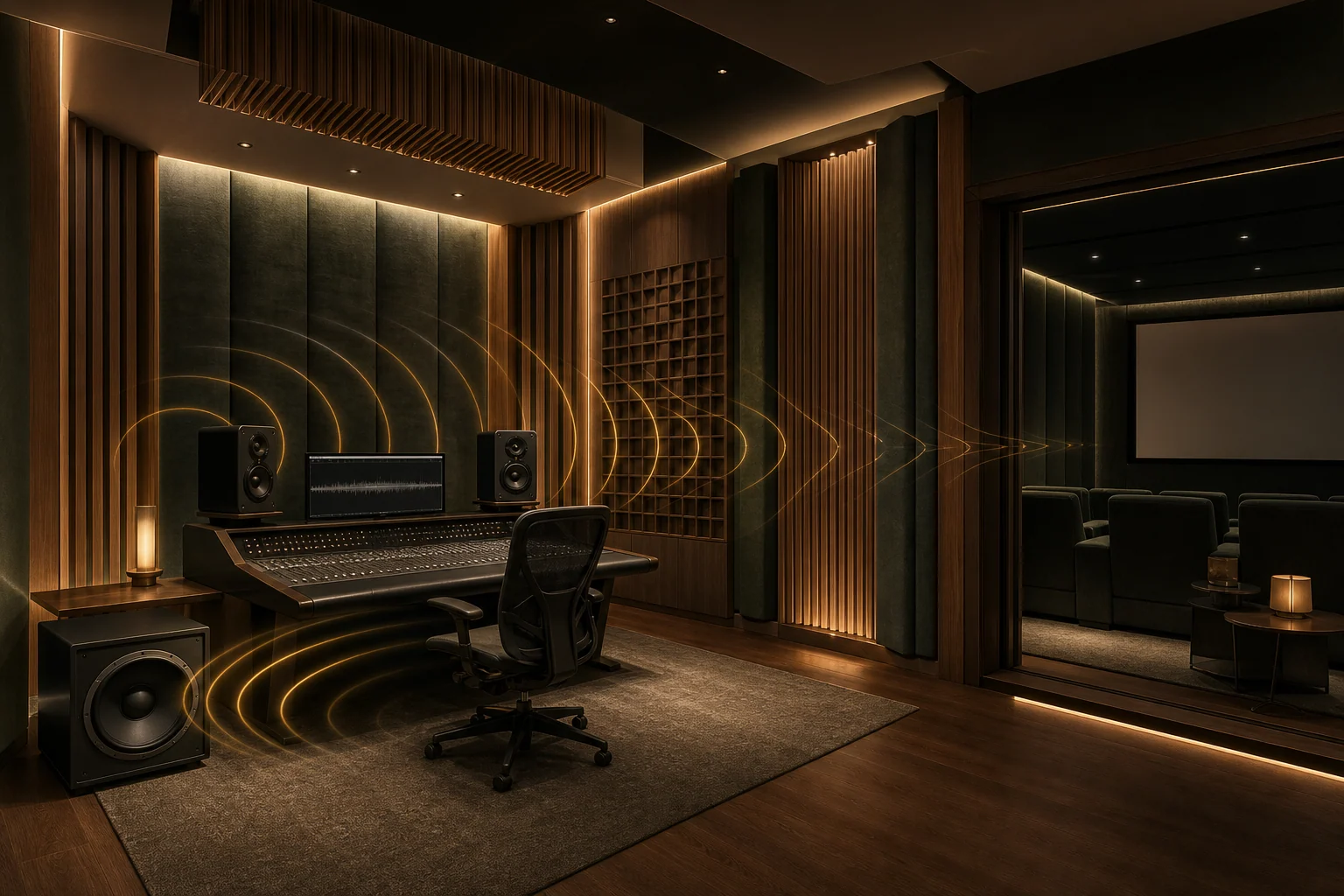
Resolve reverberation, echoes, background noise and room-response defects through architectural acoustics before designing loudspeakers; electronic equalization cannot repair the room itself.
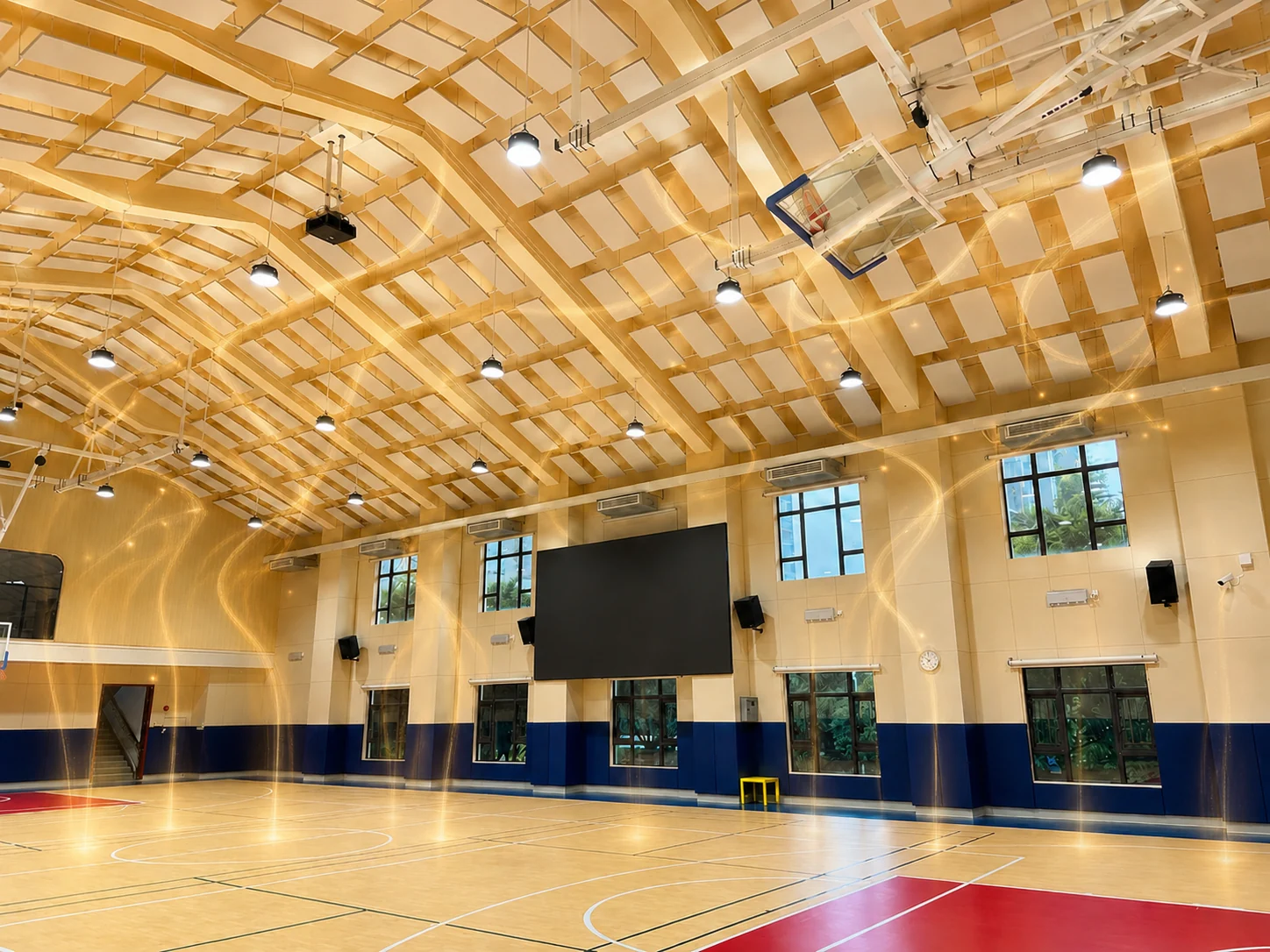
Control loudspeaker directivity, coverage angle, position, delay and sound-pressure distribution to reduce wasted energy on walls and ceilings.
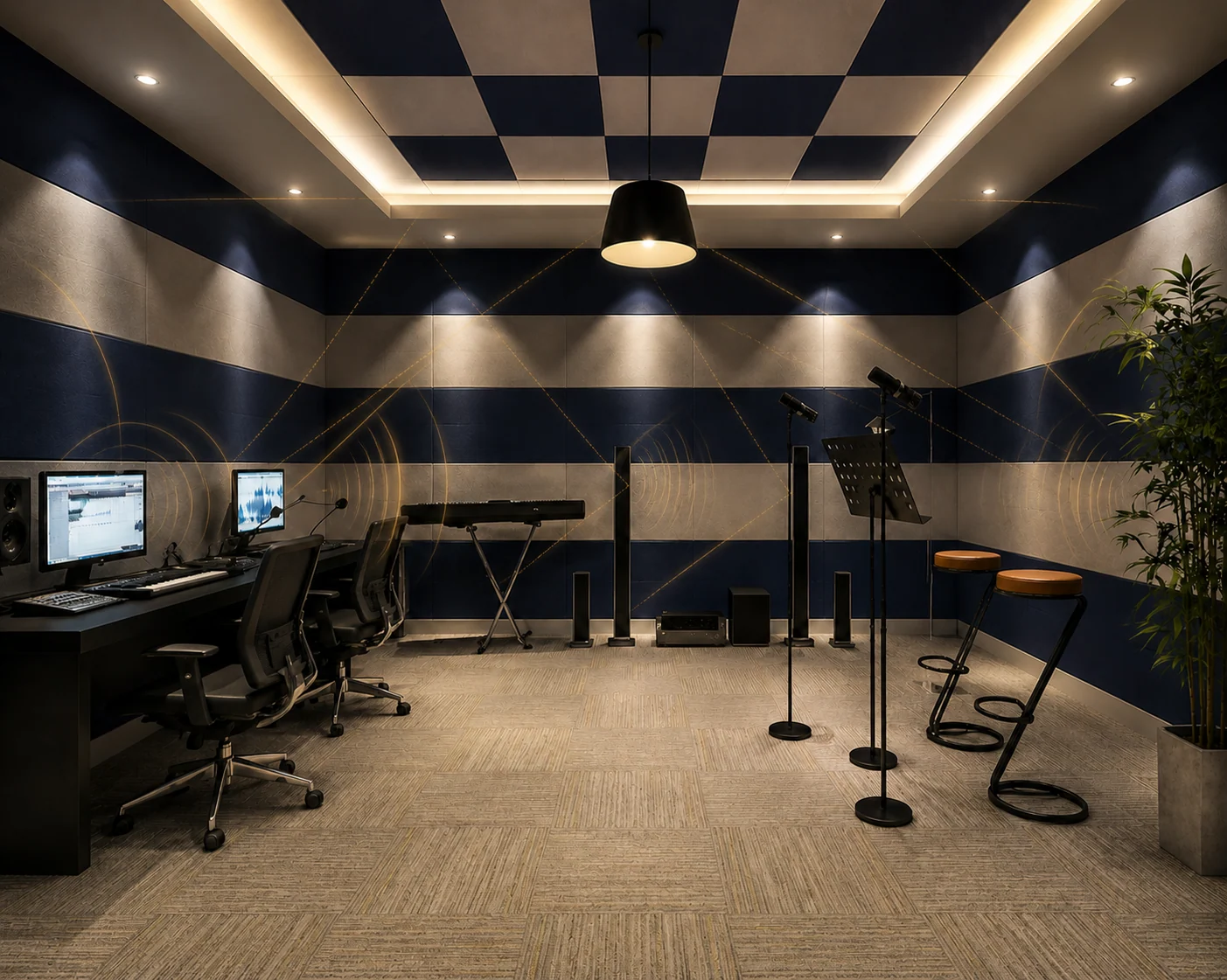
Coordinate microphones, reinforcement, feedback suppression, digital signal processing and assisted-listening systems for clear speech, natural music and even seat coverage.
Simulate and detail acoustic materials, loudspeaker coverage and interior geometry together, then commission with reverberation, clarity, uniformity and sound-system tests.
Absorption alone is not acoustic design. A high-quality sound field comes from balancing absorption, reflection, diffusion, low-frequency control and electroacoustic systems for the specific use of each room, preserving both clarity and appropriate acoustic energy.
Final selection should follow room dimensions, target performance, construction, finish and applicable project requirements.
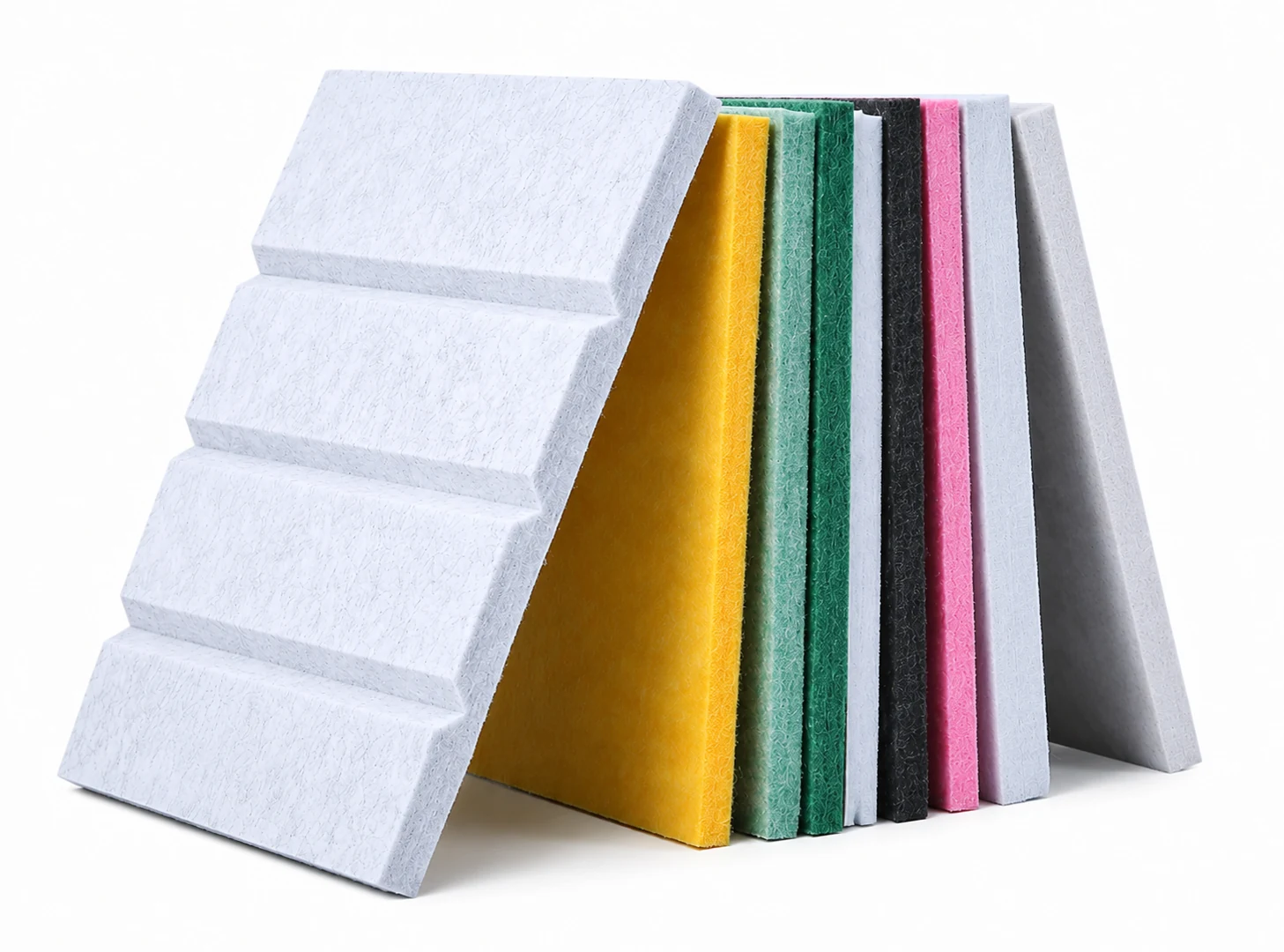

Share your drawings, dimensions, use, finish requirements and acoustic concerns. Our team can prepare a suitable material proposal.